Hotel Management
Hotel revenues come from events, tourism and business travel. Or to put it another way: room occupancy, food and beverage demand.
How to Plan and Staff a Hotel Operation Effectively
Staffing a hotel is unlike staffing any other 24/7 business. Workload can fluctuate daily, sometimes hourly and unless you understand those fluctuations, you’re forced into reactive, week‑by‑week staffing that drives up costs and stress.
To run a hotel efficiently, you need two things:
- A clear understanding of your workload
- A flexible staffing system that can adapt to it
Most hotels have neither.

Why Hotel Workload Is So Hard to Predict
Hotels rarely know their staffing requirements far in advance. Occupancy changes, events appear at short notice, and guest behaviour is anything but linear. As a result, many hotels rely on:
- Weekly staffing decisions
- Last‑minute adjustments
- Informal “workarounds”
- Over‑reliance on overtime or agency staff
Maximising flexibility while minimising cost becomes a delicate balancing act.
But it is possible — if you understand your workload properly.
Understanding Your Workload: What It Is and What It Could Be
Workload isn’t just the number of guests. It’s the pattern of demand created by:
- Check‑in and check‑out peaks
- Restaurant and bar usage
- Housekeeping cycles
- Events and conferences
- Seasonal behaviour
- Staff availability and turnover
Once you understand these patterns, you can create procedures for every circumstance. Then, instead of reinventing the wheel each week, you simply switch between pre‑designed solutions.

Holiday Management: The Hidden Challenge
Hotels face a unique problem:
Staff want holidays during your busiest season.
To manage this without chaos, you need either:
- A holidays‑included shift pattern, or
- A robust holiday management plan
Without one of these, you will always be short‑staffed when you need people most.
The Power of Annualised Hours and Banked Hours
To operate efficiently, we recommend using:
- Annualised hours — giving you predictable labour costs
- A banked hours system — giving you the flexibility to match peaks and troughs at short notice
This combination allows you to bring in more staff when occupancy spikes and give them time off during quieter periods — without increasing your annual labour cost.
Tools to Make Hotel Staffing Easier
To support hotels, we’ve created a series of books covering:
- Workload calculation
- Staffing levels
- Flexible working
- Holiday management
- Shift pattern design
And we’ve developed VisualrotaX, software designed specifically for complex hotel operations.
VisualrotaX:
- Tracks staff hours, holidays, sickness, and banked hours
- Highlights shortages instantly
- Shows who is available to move between departments
- Helps you smooth out peaks and troughs
- Ensures every employee receives exactly the right number of hours
- Minimises labour costs without compromising service
It gives managers the information they need — at their fingertips — to make smart, fast decisions.

Hotels Are Complex — But the Solution Doesn’t Have to Be
Hotels have many departments with different demands, but that doesn’t mean each area needs its own unique staffing method. In fact, that’s often where inefficiency creeps in.
A consistent, logical, company‑wide approach will always outperform a dozen different local methods.
Hotels are about people — and people are predictable. Whether staff or guests, their behaviour follows patterns. Once you understand those patterns, everything becomes easier.

The Core Tasks of Hotel Staffing
Every hotel operation can be broken down into a few essential tasks:
- Calculating workload and converting it into man‑hours
- Determining how many hours each employee can contribute
- Calculating the number of staff required in each skill set
- Setting the right terms of employment
- Calculating operational cost
- Calculating income generated by the workload
- Matching staff hours to workload
- Designing the shift pattern
It sounds overwhelming — and that’s why it’s rarely done properly. But with the right tools and methods, it becomes a structured, manageable process.
Why Planning Matters — Even With High Staff Turnover
Hotel staff turnover ranges from 65% to 132% depending on the hotel type. Add internal job changes and transfers, and it’s easy to see why many managers feel there’s no point planning ahead.
But that’s exactly why planning is essential.
You know your workload months in advance.
You know the roles you need to fill.
You just don’t know who will be in them yet.
We can show you how to plan effectively despite turnover — and how to make staffing a simple, repeatable process.
Why Managers Struggle — And How to Fix It
Newly promoted managers are often thrown in at the deep end. They’re expected to staff their department within budget, but:
- They receive no formal training
- There’s no company‑wide method
- They inherit the previous manager’s habits
- They rely on personal experience and guesswork
No wonder every department ends up inventing its own approach.
With the right training, tools, and structure, managers can stop firefighting and start running a stable, efficient, predictable operation.
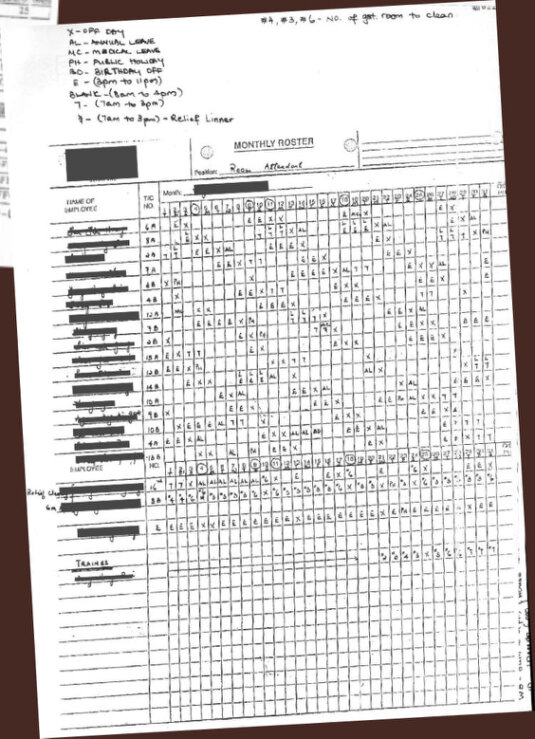
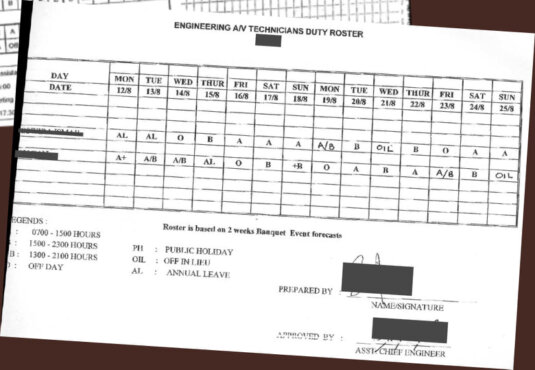
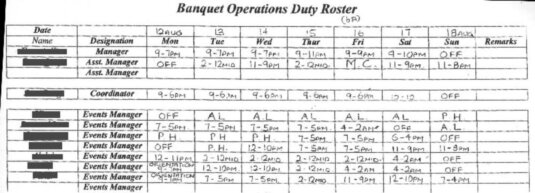
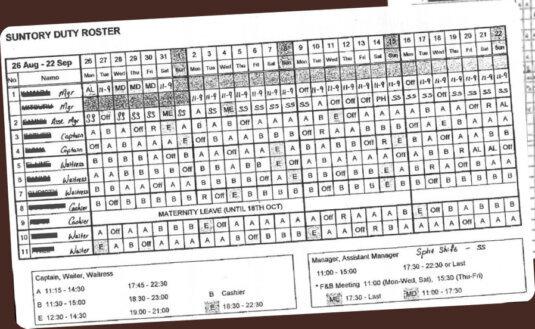
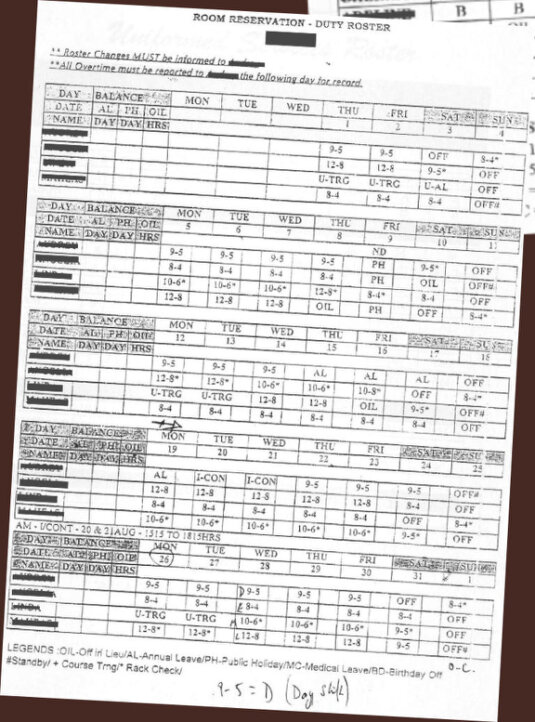
The above are examples of how a group of managers, all in the same hotel, organise their individual departments, each to his own!. How much simpler and easier it would be if you could call on our services to help start the process. Then at the same time, we could train each manager in the best way to organise the roster for your specific requirements.
Points to note, and check for in your own hotel rosters.
* Do you use computer print outs, or are some handwritten?
* Do you use the same time frame or are some for one week at a time, some for two weeks, some for four weeks, some for a calendar month?
* Do you total up the number of shifts?
* Do you total up the number of hours?
* Where are these totals placed on the roster? Some have totals on the left, some on the right, some under the roster.
* Do you define the shifts on the roster? Where do you put these definitions? Some define the shifts in the roster, others have the definitions under the roster, others above the roster, some have them randomly throughout the roster.
* Are your rosters consistent? If not then it makes it very difficult to know what is happening.
None of the above examples have any indicators regarding workload, such as occupancy or special events. It doesn't have to be like that. For instance. The events calendar and room occupancy determines many factors involved in their workloads, and these are known fairly well in advance so they can be recorded daily on the roster.