Banked Hours is a great way to improve your shift pattern and ensure that shift workers have a better work/life balance.
For Managers of Operations that involve shift working, there are a number of essential tools that they need to know about and use if possible. Banked, or Reserved, Hours is one of them. This book looks at the details of introducing and using Banked Hours based on our experiences with the many organisations that use them.
There are many occasions when minor problems like unexpected absence can become a major crisis. However just a little bit of flexibility could solve the issue in an instant. The main problem with absence if it is not covered is that you rarely just lose the man hours associated with the absence. This is because your staff will work as a team and the loss of one person means that everyone else tries to do their job plus that bit extra. This leads to a reduction in efficiency, focus and ultimately productivity. This can then have a knock on effect to the next shift because work, that should have been done, is unfinished.
Bank Hours or Reserved Hours are the terms used to reference a particular technique of flexible working. Flexible working arrangements make the operation more efficient and cost effective. A flexible working arrangement means that you don’t have to schedule additional workers on to every shift to cover for absences.
This new edition covers how to negotiate Banked Hours, on-call rotas, benefits and the practical side of Banked Hours. There are also many examples of how Banked Hours can operate.
If you are a manager, union official or shift worker and want to know more about Banked Hours, this book is for you.
Banked Hours
Banked Hours are a very efficient and effective way to run a shift operation.
Our book, available to download, or as an ebook on Kindle, or as a video series, explain how to set them up and how to use them to run the shift operation.
The topics covered in these include:
- Introduction to Banked Hours
- Creating Banked Hours
- Training and Flexible Working
- What Happens in Practice
- Benefits of Banked Hours and Flexible Working
- Extending Shift Lengths
- Sending People Home
- Abuses and Fears
- Union Negotiation
- Summary of Banked Hours and Flexible Working
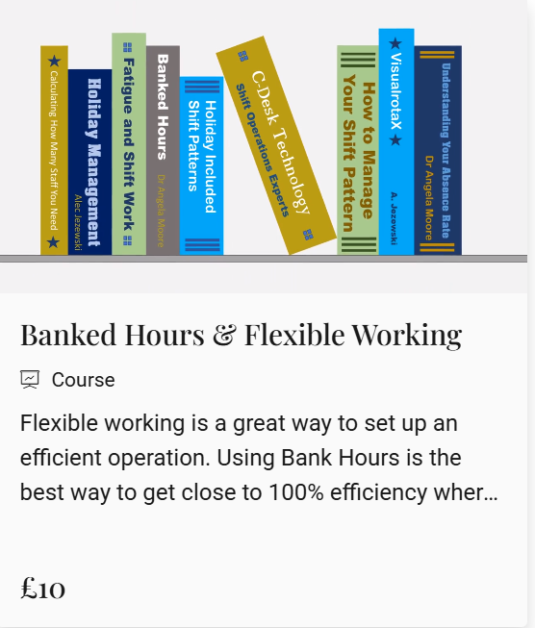

Banked Hours Kindle Book
Available on Kindle. Pages:133
Banked Hours is a great way to improve your shift pattern and ensure that shift workers have a better work/life balance.
For Managers of Operations that involve shift working, there are a number of essential tools that they need to know about and use if possible. Banked, or Reserved, Hours is one of them. This book looks at the details of introducing and using Banked Hours based on our experiences with the many organisations that use them.
There are many occasions when minor problems like unexpected absence can become a major crisis. However just a little bit of flexibility could solve the issue in an instant. The main problem with absence if it is not covered is that you rarely just lose the man hours associated with the absence. This is because your staff will work as a team and the loss of one person means that everyone else tries to do their job plus that bit extra. This leads to a reduction in efficiency, focus and ultimately productivity. This can then have a knock on effect to the next shift because work, that should have been done, is unfinished.
Bank Hours or Reserved Hours are the terms used to reference a particular technique of flexible working. Flexible working arrangements make the operation more efficient and cost effective. A flexible working arrangement means that you don’t have to schedule additional workers on to every shift to cover for absences.
This new edition covers how to negotiate Banked Hours, on-call rotas, benefits and the practical side of Banked Hours. There are also many examples of how Banked Hours can operate.
If you are a manager, union official or shift worker and want to know more about Banked Hours, this book is for you.
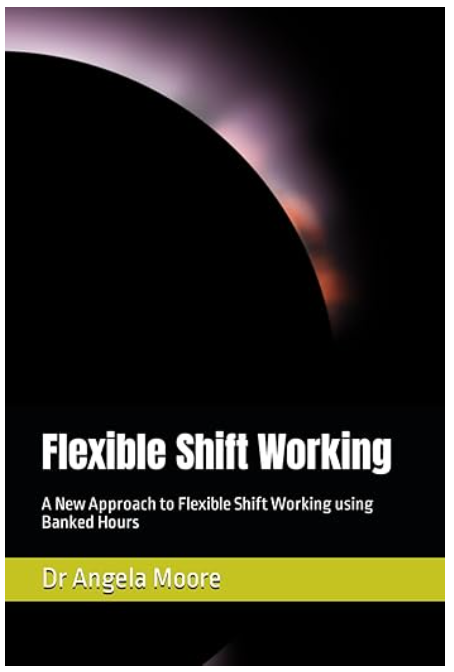
Flexible Shift Working – Create Fair, Efficient and Truly Flexible Workplaces
Flexible working isn’t just a trend: it’s what employees want and what organisations increasingly need. But achieving real flexibility in a shift‑working environment can feel impossible. How do you give people the work/life balance they deserve while still ensuring the right skills are available at the right time? Flexible Shift Working shows you exactly how to strike that balance.
This book takes you step‑by‑step from the core concepts of Banked Hours and other flexible working techniques through to full implementation. You’ll learn how to design systems that are fair, transparent, and efficient, and how to avoid the common mistakes that cause flexible working schemes to fail.
Drawing on years of experience with organisations across production, security, utilities, call centres, and 24/7 operations, this book explains how Banked Hours can transform the way you manage staffing, absence, and workload. You’ll discover how a small amount of flexibility can prevent minor issues from becoming major operational problems, and how to “sell” the concept to both employees and managers so everyone feels confident and supported.
And it’s not just for shift workers. There’s even a dedicated section for traditional 9–5 operations, showing how flexible working principles can improve wellbeing, efficiency, and fairness in any workplace.
Whether you’re a manager, union official, HR professional, or simply someone who wants to understand flexible working properly, Flexible Shift Working gives you the practical tools, examples, and insights to make flexibility work for your people and your organisation.
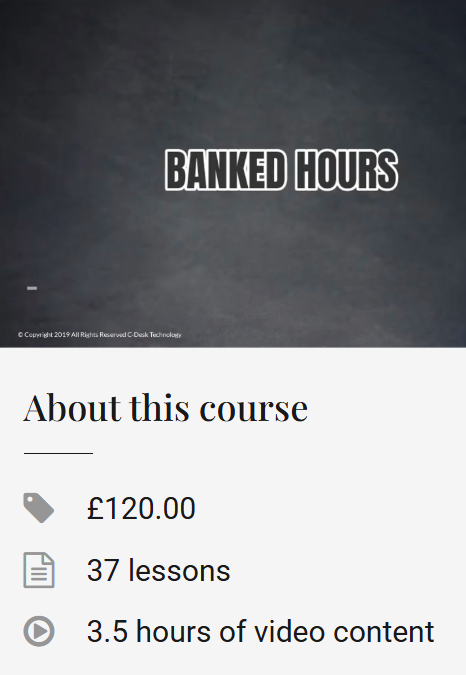
Banked Hours – Online Course (3.5 Hours of Video Training)
If you want to understand how Banked Hours really work in a shift‑working environment, this course gives you everything you need. Across 3.5 hours of clear, practical video content, you’ll learn exactly how to introduce, manage, and get the best from Banked Hours in your operation.
This course is designed for anyone who wants to use Banked Hours effectively, but it’s especially valuable for managers, supervisors, union officials, and shift workers who deal with the day‑to‑day realities of staffing, absence, and workload.
You’ll learn how to set up Banked Hours from scratch, how to build fair and transparent policies, and how to run the system smoothly once it’s in place. The course includes real examples of how organisations incorporate Banked Hours into their shift patterns, how they use them to cover unexpected absence, and how a small amount of flexibility can prevent a minor issue from becoming a major operational problem.
By the end, you’ll understand not just the theory, but the practical, lived‑in reality of using Banked Hours to improve work/life balance, protect productivity, and strengthen your shift pattern.
- Calculating Banked Hours
- What Happens in Practise when using Banked Hours
- Ad-hoc Workloads with Banked Hours
- Fairness and Banked Hours
- Uses for Banked Hours
- Flexible Shifts
- Training with Banked Hours
- Stepping up with Banked Hours
- Skills Matrix and Banked Hours
- Absence Cover using Banked Hours
- Cover Shifts and Banked Hours
- Work-life Balance and Banked Hours
- Benefits of Banked Hours
- Terms of Employment and Banked Hours
- Volunteering and Banked Hours
- Extending Shifts using Banked Hours
- Different Length Shifts and Banked Hours
- Multiple Approaches to Covering for Absences
- Sending Employees Home with Banked Hours
- Job and Knock with Banked Hours
- Rules for Fairness when Working Extra Hours
- Long Term Sick and Banked Hours
- The Danger of Forming a Ring
- Abuses of Banked Hours
- 4on-4off Example with Banked Hours
- Equalising Hours with Banked Hours
- Exampled of Shift Swaps with Banked Hours
- 2nd Example of Shift Swapping with Banked Hours
- Example of Carry Over of Banked Hours
- Example of 232 with Banked Hours
- Exampled of Banked Hours with 8-hour shifts